Monday, December 9, 2013

A Changeable Season

by Beth Sullivan
Here we are in December. We have had several significant periods of hard freezing, and even some light snowfalls. Yet, we also have had days that are positively balmy-days near 50 degrees, great for hiking, working outdoors, squeaking out a few more of those chores we thought we were done with, stewarding our preserves.
It was on just such a warm, moist and quiet day this past week, that several of us donned waterproof footwear and headed into the Fennerswood Preserve on North Main Street in Stonington. The preserve is quite large and is comprised of several parcels acquired over time and spanning the roadway. The West side has several lots along the road that will be maintained as fields as we combat invasive vines. Another roadside lot will be reverting to young forest. The loop trail takes you west to a lovely waterway: Stony Brook, which is protected along much of its path, by Avalonia Preserves, before it makes its way to Quanaduck Cove.


The East side is un-trailed. The acres along the roadway were once pastures. There are a few older trees, many oaks, that have stood maybe for 100 years or more. But they are surrounded by many young trees, new growth, similar size, crowding in, competing for sun space. A stroll through this area reveals a number of trees with a very recognizable trait: the peeling bark of the Shagbark Hickory. The distinctive bark grows and flakes leaving crevasses and cracks. These are hiding places for numerous insects, spiders and even bats which will use the large flaps of bark as protective hiding places during the day, to remain out of sight, until nightfall.
Shagbark Hickory
Woodpeckers were abundant the day of our walk. Hairy, Downy, Red Bellied and Flicker were heard. These birds, as well as Nuthatches, Brown Creepers and others, work around the shag bark to discover insects or their larva hidden there. A pile of yellow shafted feathers spoke of a drama: a Flicker had fallen victim to a hawk.
Hairy Woodpecker
Yellow-shafted Flicker
Signs of a Hawk taking a Flicker.
As we walked further East into the preserve, the wetlands spread out in front of us. Mounds of sphagnum moss remain green throughout the winter. In many areas, spikes of Skunk Cabbage were already emerging and will be the first plants breaking through the snow in spring. And then we heard a familiar but out of place sound: a Spring Peeper,no doubt confused by the warm weather.
The ground was unfrozen; our feet slipped into puddles. This area will be impossible to navigate in the wet spring season, but now, following a dry fall, we could penetrate the wet areas and explore until we reached the sandy stream bed where the waters gathered into a flowing brook. Watercress was bright green even now. Small clumps of violet leaves dotted the mossy mounds. It didn’t seem like almost winter.
As we looked more closely we were truly surprised to spy a good sized bullfrog, quietly camouflaged and quite subdued. The warm weather can bring amphibians out of a hibernating state. This can be dangerous as they are likely too cold to be able to hunt and find food. They are too slow to evade predators, and their metabolism will be increased just enough to use up their valuable fat stores, meant to supply them the whole winter. Not a good situation. We moved him closer to water, covered him with leaves and wished him well.
Bullfrog on a warm December day.
A very strange December day but truly an interesting excursion into a lovely wooded wetland.

Photographs by Beth Sullivan and Rick Newton.

Monday, December 2, 2013

Counting Blessings

Now that we have stopped counting calories we can continue to count our blessings. In this season of giving and thanks, we have a great deal for which to be grateful.

Avalonia Land Conservancy is founded on the generosity of its members. They are the bedrock. Each year that our membership grows, our foundation can get stronger. We work on outreach to connect with those who do not yet understand our mission. We strive to engage the next generation of conservationists. We post our signs so we have a visible presence in the communities where we have our preserves. We invite all, members and non-members alike, to stroll the trails, hike the woods, and enjoy what Avalonia has been able to preserve with the support of its members. Thank you.


Avalonia is further supported by the generosity of special donors: those who exceed expectations because they believe in the mission and understand the importance of the preservation of a resource that is rapidly changing and disappearing. There are no words of thanks special enough to recognize a larger gift, a grant, or a piece of treasured land, entrusted to Avalonia for care in perpetuity. It is not only our mission, but our promise, to care for each donation to the very best of our ability. Thank you.

None of that caretaking can be done without our volunteers. With the exception of one part-time paid staff person, the organization is completely dependent on its volunteers, from top to bottom. From executive officers to ground teams: volunteers direct and lead, man the keyboards, keep the books and lists, and attend conferences and meetings. Volunteers do outreach and education. Volunteers monitor the preserves, clear trails, mow fields and improve habitat. There is no way to accurately count all the hours amassed by our volunteers, and no way to truly estimate the value. Thank you.

It might be cold, and everyone is busy. It has been said before, but bears saying again: Go out and find a place of peace. If it is an Avalonia preserve, please remember all it takes to have that space and place available. Give thanks.


Written by Beth Sullivan.

Photographs by Rick Newton and Beth Sullivan.

Monday, November 25, 2013

It’s all about the Turkeys!

The leaves are deep on the ground. It is impossible to walk quietly any more, nearly impossible to sneak up on wildlife. Unless of course they are making more noise than you are.
If you walk a wooded trail, especially one that borders open fields, listen for rustling leaves and what sounds like happy laughter. You will probably come upon a flock of wild Turkeys. They are quite abundant this year, and far more visible as they guide their now, nearly full grown, young through the woods moving from place to place.
Adult male in full display.
During the earlier parts of the year, while the young are so little and very vulnerable, they are quite secretive. You can literally stumble into a family group and they will not burst up and away until you are almost upon them. Even at a very young age, the little ones have the ability to leap high, flap and lift up into trees, high enough for safety.
Now, in the fall, they are bigger and bulkier. They are actually quite fast runners, when they want to be. However when you are in your car, waiting for a flock to cross the road, they stroll quite leisurely. They will also fly when they choose. Never assume the crossing is finished. There is always a straggler, dashing across at the last minute, being a danger to himself and your car.
Hen with two young.
During the fall, several family groups often join up into flocks of more than 30. They travel together for safety, always with one or two adults on alert and on guard. The rest forage actively eating just about anything they can find. Generally vegetarian, they will eat insects during the warmer seasons. Now it is all nuts and seeds and berries. Acorns are a staple in their diet. This year has not been a good mast year, meaning not a lot of acorns on the ground. Oaks tend to have irregular cycles of acorn production and the creatures that rely on them (turkey, deer, squirrels, and other small mammals) will have population cycles that follow the food source. This could be a difficult winter for those that rely on acorns.
Showing off.
Wild Turkeys are known to visit bird feeders, feasting on the ground on sunflower seeds. They also welcome corn, peanuts and even poultry food offered by some during hard winters. It is important though to not distribute feed that has had medication, hormones or growth regulators included. Plain cracked corn is probably the best.
In the woods, look for disturbed leaves, the Turkey-scratch sites, where they scrape the leaves aside to look for nuts and seeds. It is easy to spot areas where it looks like a great leaf fight occurred, and know it is really a turkey dining area.
Turkeys foraging through a field.
Turkeys were abundant when the first “Pilgrims” arrived, a staple for Native Americans. But over the following centuries, with forests cleared and human populations exploding, their own populations plummeted until they were extirpated from a lot of the Northeast. A reintroduction effort here in CT, in the 70’s, was successful because the State had returned to being heavily forested. Natural predators include coyotes and the young are prey for a number of other larger mammals and hawks as well.
Young turkey beginning to show adult plumage.
Wild Turkeys can be found on most Avalonia preserves. They are often spotted in the fields of Preston Preserve, Knox Preserve, Fennerswoods, Deer Run and Moore Woodlands among others. But they mostly spend time foraging in the wooded preserves: Hoffman, Perry, Henne, Tefftweald, Avery, to name just a few.
Rare, partly white, wild turkey. Photo by Beth Sullivan.

When you take your post-Thanksgiving dinner walk, go slowly through the woods. Listen for rustling and gobbling. They are giving thanks for being spared this holiday!


Happy Thanksgiving to all.
Written by Beth Sullivan.
Unless otherwise marked, photographs by Rick Newton.

Monday, November 18, 2013

The Simmons Preserve: ”A Little Jewel”

From the memories of Rob Simmons.
Travel down North Main Street, south from Route 1 and you catch tempting glimpses of water through the trees and beyond the houses. Just about the time you are wishing you could get a little closer and see a bit more of the lovely cove, you might notice a strongly made stone wall with some lovely white farm gates. Pull over before you reach Palmer Street; the roadside is grassy and wide enough to park.
Quandauck Cove.
Peek over the wall, check the latch on the gate, and go on in. It’s OK. It is the Simmons Preserve belonging to Avalonia Land Conservancy. This little half-acre has more than its fair share of history and was once described as “a small but absolute jewel bit of ground which helps preserve the beauty of the area”.
The entrance gate to the Simmons Preserve.
Early land records show that in 1844, the small plot of land was conveyed by Samuel S. Denison to Benjamin S. States for the price of $150. This was apparently the first record of a plot of land that would become “The Mechanics Burial Ground”, the final resting place for numerous railroad workers who labored on the first interstate rail road from Providence to Stonington.
Old maple trees stand tall on this protected land.
The property changed hands over the decades, and in early 1900’s it was purchased by Elizabeth Eagle Simmons. She, however, was not happy to own and reside near a cemetery so she “prevailed upon her husband, Charles Herbert Simmons to purchase the deeds to all the cemetery plots from the families of the deceased”, and in 1906, he purchased land from Stonington Cemetery Association to relocate all the remains with permissions from the families. By 1922 the process was completed.
The land became a much enjoyed recreation area for the Simmons Family and was called “Bud’s Point”, after Charles Herbert Simmons, Jr. who later became the owner of the land.
Native shrubs grow along the shore.
Over the following decades the family enjoyed the lovely grounds. The area contained ornamental plantings from its years as a cemetery, as well as native shrubs and trees. The walls have withstood years of storms, and the original gates were designed by Charles Simmons Jr. himself, an architect who practiced in New York City, Connecticut and Vermont.
The main farm gate.
On Jan 29, 1986 The New London Day reported that the very same piece of land, bordering on Quanaduck Cove had been donated to the Mashantucket Land Trust, which later became Avalonia Land Conservancy. Over more than 100 years, that little piece of land accumulated history and lore and a great deal of affection. The Rob Simmons Family still lives just up the street and can view Bud’s Point out their south windows.
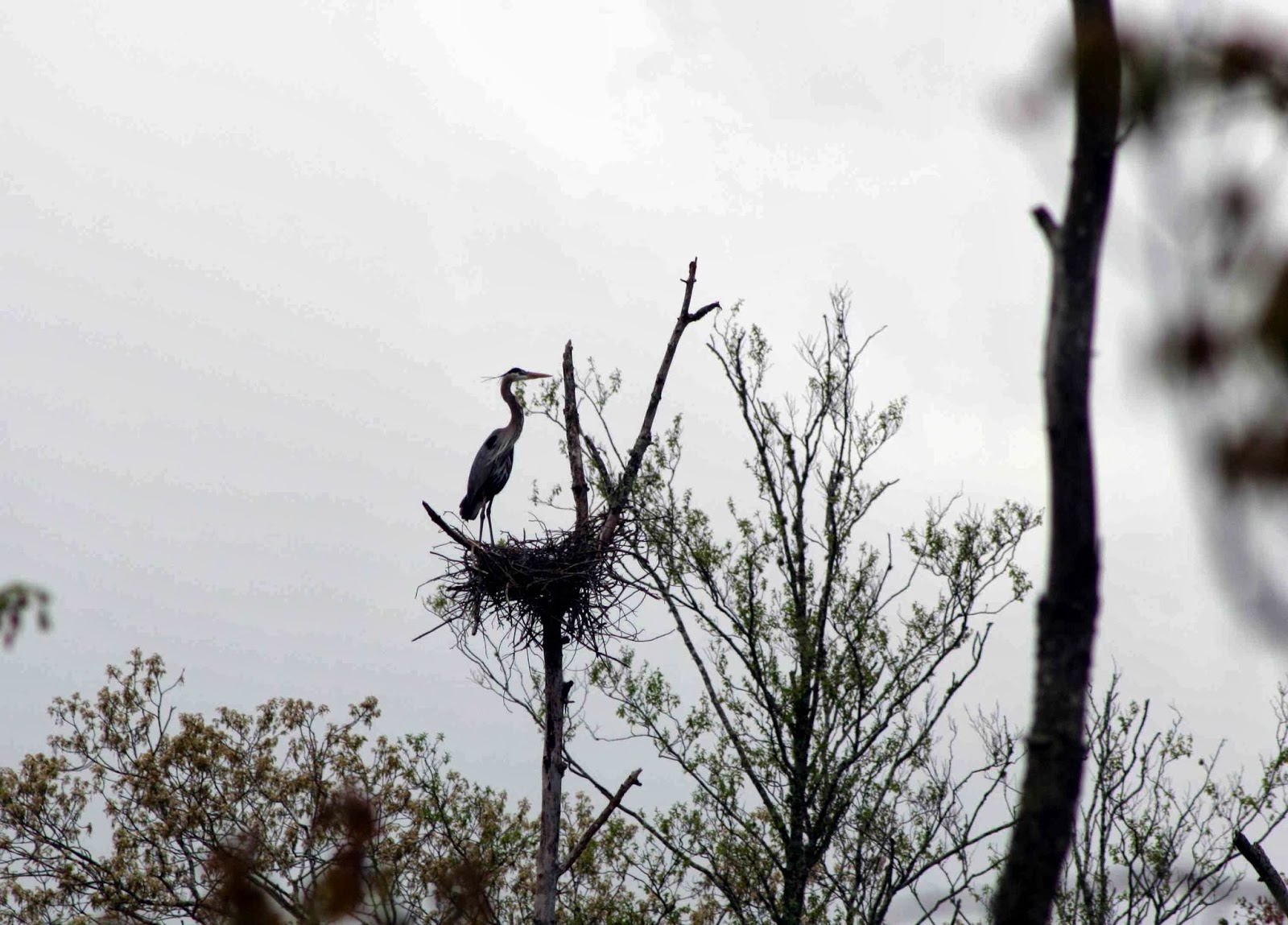
It is managed now as a nature preserve. Avalonia volunteers work to maintain the park-like setting, ornamental plantings and fend off invasives. The area is a meadow now, not a cemetery lawn, and in the early spring it is carpeted with lily of the valley that has spread wildly. You can walk right down to the water and find herons and egrets wading along the shoreline. Ducks love the sheltered cove and there has been a family of foxes seen over the years, enjoying the preserve as well.
Red Fox.
The antique gates have withstood storms and salt spray all these decades. This year, Rob Simmons, Avalonia member, donor and a steward of this property, arranged to have the gates replaced with exact replicas of the originals his father first installed. As a gift from the Simmons family, and built and installed by Dan Banning and Steve Burdick, these gates will stand as a welcome and a memory for all who chose to enter and visit the “little jewel” .
Dan Banning and Steve Burdick stand beside their handiwork.

My thanks to Rob Simmons. Most of the information in this piece was based on or quoted from his personal memoir of “The Simmons’ Preserve, Bud’s Point, The Mechanics’ Burial Ground”, based on historical documents and family lore.
Assembled by Beth Sullivan.

Photographs by Beth Sullivan, Rick Newton, and Rob Simmons.

Wednesday, November 13, 2013

Work party at the Avery Preserve in Ledyard Saturday, Nov. 16

The Ledyard Town Committee will have a work day on the Avery Preserve on Saturday, November 16th, beginning at 9:00 a.m. 
Avery Preserve

We will be doing light trail clearing work.  This involves cutting low brush intruding on the sides of the trail and cutting some limbs hanging down into the trails.  We want to restore the standard width and height of the hiking trails (4’ wide x 8’ tall).  If you can come please bring your choice of loppers, pruners, or other cutting tools for stems up to ½ inch.  Also, bring gloves and appropriate clothing for the weather.  The long range prediction is for sunny weather with temps in the 40’s.  Expected duration is 2 hours.  We will also do some minor repairs on the bridge over the stream near the sheep wash.

The Avery Preserve parking area is located at 32 Avery Hill Road in Ledyard.  This is about ¾ of a mile north of Route 214 (Stoddard’s Wharf Road).  Additional parking is available at the ball field just west of the cemetery at the corner of Route 214 and Avery Hill Road.  There is a path from the ball field back to Avery Hill Road and it is a short walk  up the road to the meeting area which will be at the West Tract entrance sign across from the parking area.

For additional information call Mike Goodwin at (860) 464-2685.