Showing posts with label Pine Swamp Preserve-Ledyard. Show all posts

Monday, August 9, 2021

Water

The landscape is created by the water.
Photo credit: David Young

by Beth Sullivan

The swamp is an indistinct edge between
land and water.

Not sure exactly why I have been thinking so much about water.   Probably a dozen different reasons.  One is a book I am reading about the 1930’s Dust Bowl era and drought and how everything, and everyone, simply dried up.  Physically and emotionally.  Maybe it is because as I am sitting and writing, my window is open and I can smell the rain as it is falling outside.  Though we had an unusually wet July  after even a week of typical summer heat and bright sun, my gardens wilted and I was grateful to have a hose and a reliable source of water to remedy the situation.   I cannot imagine the vast plains of our country dried and dusty. Dead.

Recent news headlines and photos report on the drastically low levels of water in the reservoirs out west.  Resources are simply not there.  Enough snow didn’t fall in the mountains or it melted earlier and faster and the slow steady replenishment has ceased.   The massive fires are just mind boggling and the airlifted loads of water transported and dumped on the flames seem so ineffectual It is so impossible to think of where that water is coming from and how much energy it takes to transport it to the fire site. 

The smallest drops conquer thirst.
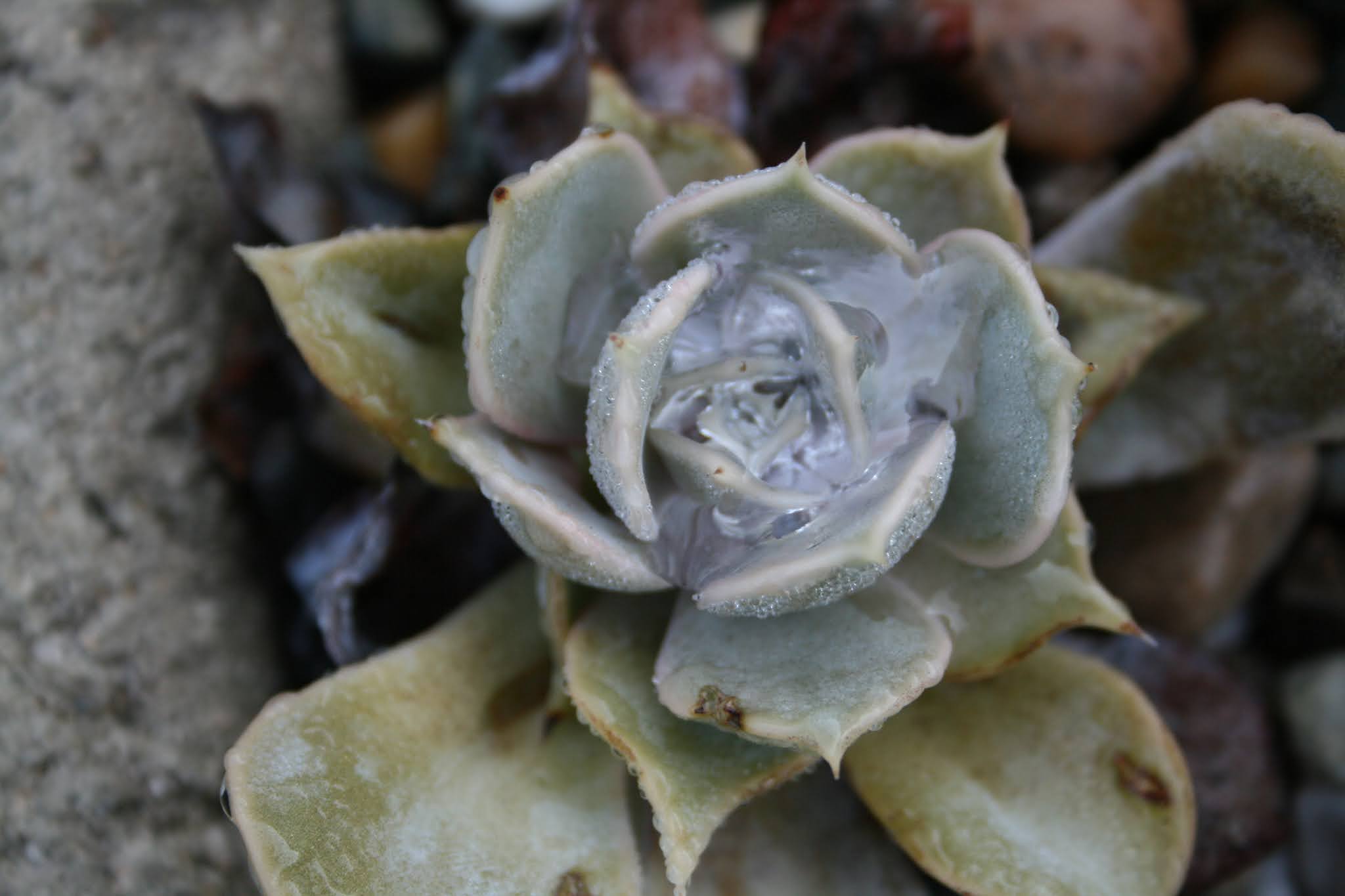
Instinctively we understand our bodies are made up of a lot of water. We recognize, without thinking,  when we need to drink. Even the smallest infant has that instinct.  All levels of organisms from complex beings to the most microscopic single celled life forms, are reliant on water.  We know that our planet is mostly water. It is the Blue Planet.  Many of us turn to water in some form or another, for our rest, peace, tranquility. Vacations.  We head to the ocean for inspiration, we sit by rivers, wade in ponds, dabble in brooks, paddle in swamps and are mesmerized by waterfalls.  Water has the ability to sculpt rock and create landscapes.
The smallest of frogs was
nurtured by a vernal pool.

We really need to think even a bit deeper though, especially as the climate is changing. Think about water that is a bit less obvious but equally as essential.  Maybe even more.  As I walked in the woods earlier this week, the path ahead of me seemed to be alive with movement. On closer inspection, I counted dozens of really, really, small spring peepers!   It was obvious that these were this year’s young, newly transformed from small tadpoles. Where had they come from? There is no pond nearby. But this spring, thanks to continuous rains, the vernal wetland in the woods stayed waterfilled long enough to support a full hatch of peepers.  It also probably supported many other creatures that depend on the same lucky circumstances.

However, this one wet spring wasn’t enough to overcome the deficit of drought experienced over the last several summers. We are still seeing mighty Oaks, whose roots extend far and deep, succumb to the stresses of the last dry years.  That is related to ground water. Deep resources, springs, aquifers, and headwaters where the earth’s waters merge, purified and restored to hydrate the deepest roots and to replenish our reservoirs.

Streams refresh.
Part of Avalonia’s mission to preserve and protect the land we love, also includes the waters both above and below ground, which the land itself protects. Most of our recent acquisitions include significant wetlands or offer buffers to important waterways in our area.  We need to really give more thought to the water we are blessed with, follow it back from the tap to the reservoir to the stream to the aquifer or spring. What replenishes that?  Please visit some of our preserves with a different view. Think of the life-giving water that is present. Think of how the water creates the habitat. Think of all the organisms that depend on that water. We know about greenways. Think blue ways too.


Still water reflects.


We are drawn to water for its ability
to soothe.

All photos by Beth Sullivan, except where noted.  

Monday, December 8, 2014

Pine Swamp Wildlife Corridor, Part 2

By Mike Goodwin

If you missed part 1, you can find it here.


A Painful History 

In the center of the swamp is Pequot Island, scarcely half an acre in extent which rises 50 feet out of the water. The exact location of this island is uncertain. Soon after the destruction of the Mystic Fort of the Pequots by Major Mason in early colonial days, a ragged remnant of the tribe under the leadership of Pequot brave Squirrel Tooth, as he was known to the colonists, fought with the colonists along the east bank of the Thames River. The colonists drove Squirrel Tooth’s party into Pine Swamp where they took refuge on Pequot Island. Eventually the Indians were starved into submission and surrendered. The remaining 20 braves were bound hand and feet, put on a sloop and taken to the mouth of New London harbor and driven overboard. The women and children were placed in bondage to the colonists.

A unique mixture of habitats

Since colonial time there has been development around the fringes of PSWC but the swamp has never yielded to man. In the northern portion, there was a sand and gravel excavation that later filled with ground water to form a series of ponds. One of the major power lines in the area runs over a mile through the preserve. This is an important corridor because all large trees are continually trimmed to leave a shrub land providing a special habitat for birds and small animals. Laurels bloom in profusion here in early summer. The southern portion of PSWC contains stands of Rhododendron maximum, one of the largest of the rhododendron family. These bloom in early July and are likely to be several hundred years old.

PSWC started with a donation from Dow Chemical

PSWC began as a 97 acre parcel donated by Dow Chemical to celebrate their centennial in 1997, called the Dow Centennial Preserve. In 2003, Avalonia purchased and was gifted addition parcels from the descendants of Milton O. Slosberg and Harry Leiser. Additional parcels were donated by the Town of Ledyard in 2005 and 2014 to bring the preserve to its 387 acre current size.
The historic stone bridge over Tom Allyn Brook.

Avalonia Land Conservancy maintains an extensive trail system around the fringes of the swamp. Come for a visit and enjoy the beauty of this varied and timeless landscape.
Photographs by Mike Goodwin.

Monday, December 1, 2014

Pine Swamp Wildlife Corridor, Part 1

By Mike Goodwin
The Pine Swamp Wildlife Corridor (PSWC).

Avalonia Land Conservancy’s largest preserve, Pine Swamp Wildlife Corridor (PSWC), is located in the Gales Ferry section of Ledyard. Most of the property is a peat swamp that is little changed since from Colonial times. PSWC has beautiful ponds, a shrub covered power line right-of-way, morasses and quicksands, glacial moraines, and open forests. The southern portion of PSWC protects an important ground water recharge area supplying the drinking water needs of local households.

Created by a glacier

The Wisconsin glacier covered all of Connecticut and Long Island until about 13,000 years ago. As the glacier receded it left a belt of huge boulders across what is now PSWC from the NE to the SW known as the Ledyard Moraine. Some boulders are thirty feet in diameter. They are piled up 3 and 4 deep and form caves in which wildlife like fox and coyote make their home. In Colonial times wolves and bears also lived there. The rocks are covered with mosses and lichens and rock polypody ferns, some are hundreds of years old. Best viewing of the moraine is from the yellow and red trails.
In pre-Colonial times the swamp was well known to the local Indians who called it Cuppacommock which translates to a refuge, hiding place, or a close place or haven. It was also called Ohomowauke meaning owls’ nest, owl-place, or a resort of owls, (mhmmau-auke).


Known to ship-builders


Early colonist ship-builders, back in the sixteen hundreds, depended on pine swamps for masts and spars for their vessels. This pine swamp was known throughout the Connecticut colony as “Mast Swamp.” Mast Swamp furnished spars for more than a century. The last known pines were removed from the swamp in 1820, the final ones having been cut to supply ships in the Revolutionary War and War of 1812. Large pines have since regrown in the swamp.


Photographs by Mike Goodwin.
Look for part 2 next week.

Thursday, May 16, 2013

Living Color: The arrival of the migrant Warblers


After a long winter of brown and gray drab, we are now getting to experience sensory overload in full color. Not only are we wrapped in greens of every hue; flowers of all colors are appearing everywhere we turn. But the arrival of migrating birds, most especially the Warblers, brings a new wave of color.

Almost all Wood Warblers migrate south for the winter. Being insect eaters, most cannot survive a winter here unless they can adapt to eating berries. Now that Spring is in full swing, they are moving up from wintering grounds as far away as the southern reaches of South America. Some will stop here for a short time before moving farther north to breeding grounds in Northern forests, but others remain to nest here.

Each species of warbler has a niche, a favorite habitat that it prefers and where we can expect to locate it. While many warblers migrate northward along the coast, by the time they reach this far north they are beginning to disperse and seek out their preferred habitat. Avalonia properties throughout Southeastern CT host a vast array of varied habitats, and therefore many of them are great places to pick up some “spring color”.

Yellow Warbler
The YellowWarbler is just that: very yellow! Some show streaks on their chest and sides, and they are quite widespread. They prefer to nest near and around wetlands and waterways as well as shrub areas. They are already at Knox and Anguilla Brook Preserves in Stonington, Henne in North Stonington, Pine Swamp in Ledyard as well as many others with swamps and wetlands. The Common Yellowthroat is another wetland lover, but the male of this species sports a black mask: very distinctive against the bright yellow.

Common Yellowthroat Warbler
The American Redstart male is stunning black and orange while the female is olive with bright yellow flashes. They prefer second growth woodlands, woods with brushy undergrowth and hedge edges as well. Many open space areas have their required habitat conditions. They can often be found on roadside edges as well. Knox Family farm is a good area for them.
American Redstart Warbler

Blue-Winged Warbler


Prairie Warblers, Blue-Winged Warblers, Yellow Breasted Chats and Chestnut-sided Warblers are the ones who benefit from shrub land regeneration projects and young forests. Power line cuts have some of the best shrub habitat, and areas within Pine Swamp Wildlife Corridor as well as the Knox preserve are being managed for such habitat. The Peck and Callahan Preserves in Stonington are being restored as habitat for the New England Cottontail, but that same habitat will benefit these endangered birds as well. The Preston Preserve is being cleared of invasives, and anyplace native shrubs are being re-established, these shrub land specialists will thrive.


Many of the woodland species move right on through, like the Yellow-Rumped Warblers, but several make their homes in our woodlands including the Ovenbird, Black-and-WhiteWarbler, and Worm-eating Warbler.
Yellow-Rumped Warbler

Black-and-White Warbler

There are great field guides to carry out on a hike to help you identify those flashes of color we see now. If you have a smart phone there are great apps that help with not only visual ID but will play recordings of their songs as well. Spend a little time studying and practicing with those apps. It will be worth the effort. And don’t forget to schedule a neck massage after a day of warbler watching. They tend to take to the high treetops!!

Written by Beth Sullivan.
All photos by Rick Newton.

Learn more about all these colorful warblers at the Cornell Lab of Ornithology.